

HMEC Mentorship Supports Award-Winning Science Fair Project
A recent University of Hawaiʻi News article highlighted the growing impact of STEM mentorship programs in supporting the next generation of researchers and engineers at the Hawaiʻi State Science and Engineering Fair. One participant, under HMEC mentorship, explored how ocean wave motion can be converted into electricity through a simplified linear generator system.
The student’s original concept—designing a full ocean-deployable wave energy device—was refined into a more focused and achievable project: improving the performance of an educational-scale electromagnetic generator designed by Erik Bendickson at the UH STEM Pre-Academy. This approach allowed the project to concentrate on the core physics of energy conversion while remaining practical for experimental testing.
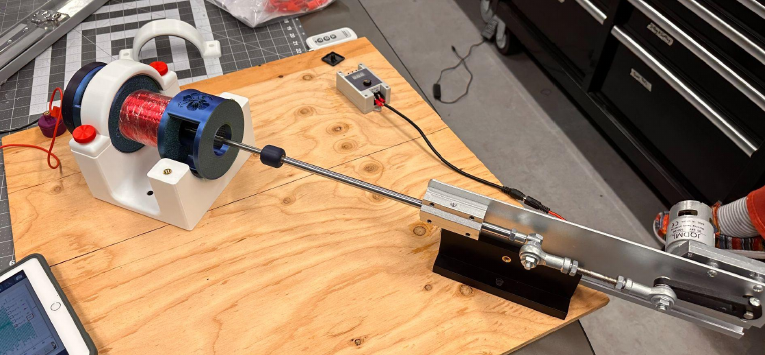
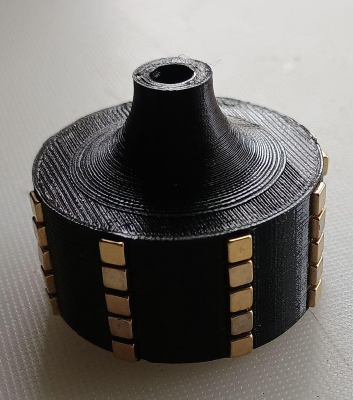
At the center of the work was Faraday’s Law of electromagnetic induction, which governs how changing magnetic fields generate electrical voltage. Building on this foundation, the student investigated whether alternative magnet configurations could improve generator performance by increasing magnetic flux through the coil.The project explored both conventional magnet arrangements and more advanced configurations using Halbach array structures—engineered layouts that concentrate magnetic fields in specific directions. Initial results revealed that stronger magnetic fields alone do not guarantee improved electrical output. Instead, the orientation and distribution of the magnetic field relative to the coil proved to be the controlling factor.
Through iterative design, testing, and analysis, the student developed a refined configuration that aligned the magnetic field more effectively with the coil geometry. The final design produced measurable electrical output and demonstrated improved efficiency when normalized by magnet weight, highlighting a more effective use of materials.
Beyond the technical findings, the project provided hands-on experience in experimental design, rapid prototyping using 3D-printed components, and data interpretation. It also reinforced an important engineering principle: translating theoretical concepts into physical systems often reveals complexities that are not immediately apparent in simplified models.
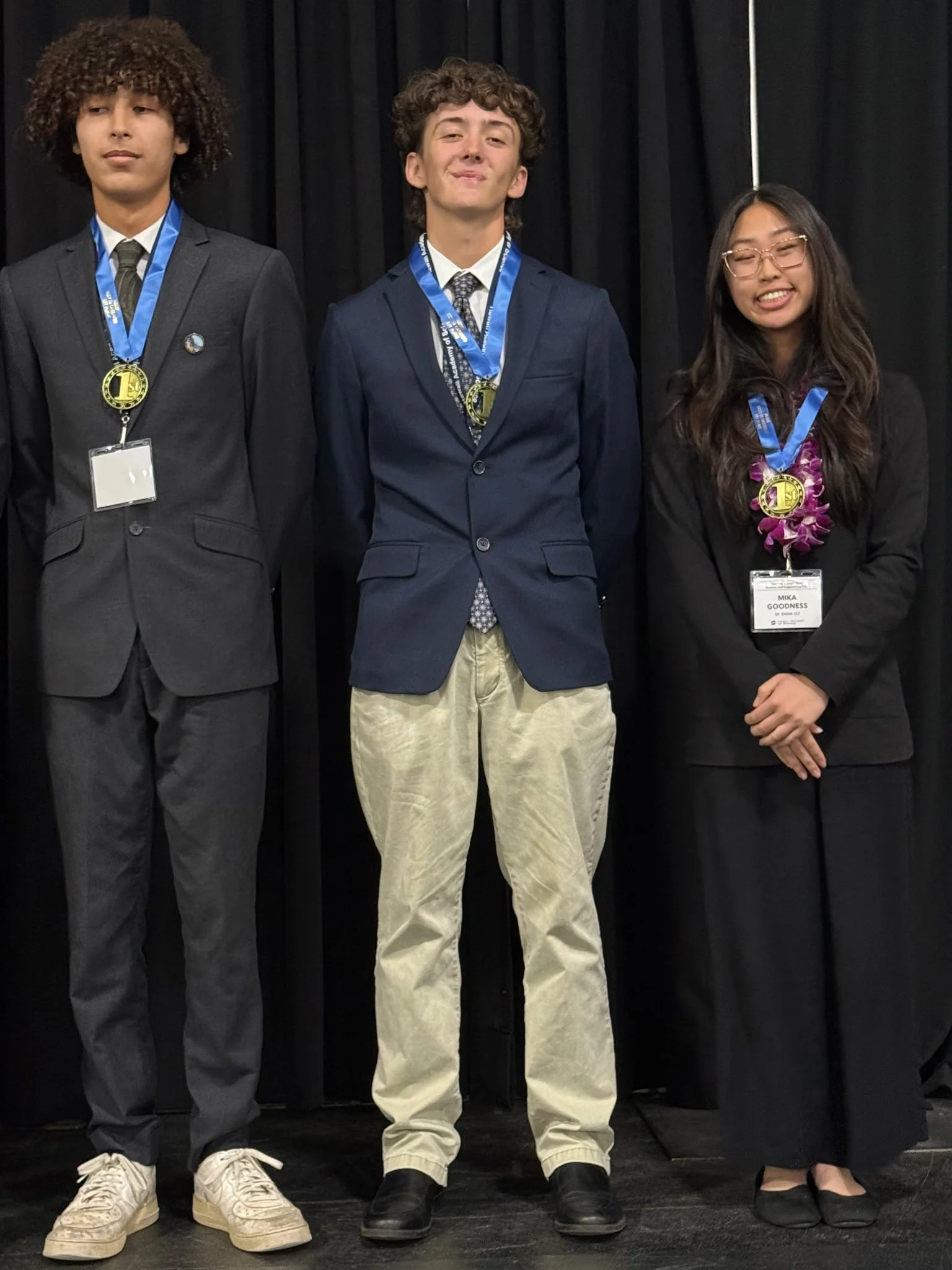
The student presented the project at the district-level fair and advanced to the Hawaiʻi State Science and Engineering Fair, where the work earned first place in its category. This achievement reflects both the student’s initiative and the effectiveness of structured mentorship in supporting meaningful research experiences.
This effort illustrates how complex renewable energy systems—such as wave energy converters—can be distilled into accessible, hands-on learning opportunities. By focusing on fundamental principles, HMEC’s mentorship activities help bridge the gap between classroom theory and real-world engineering, supporting workforce development and increasing awareness of marine energy technologies across Hawaiʻi and the USAPI.