

What is Marine Energy?
Marine energy refers to a family of renewable energy technologies that capture the natural energy present in oceans and coastal waters and convert it into usable electricity or other forms of power. This energy comes from predictable and continuously replenished ocean processes such as waves, tides, ocean currents, and thermal differences between warm surface water and cold deep water. Marine energy systems are deployed in coastal or offshore environments and are designed to operate alongside existing ocean uses while withstanding harsh marine conditions. As a renewable resource, marine energy offers the potential for reliable, low-carbon power generation—particularly for coastal, island, and ocean-dependent communities—while also supporting broader goals related to energy resilience, grid diversification, and sustainable use of ocean resources.
Within the United States, federal support for marine energy research, development, and deployment is led by the Hydropower and Hydrokinetic Office (H2O), which operates under the U.S. Department of Energy’s Office of Energy Technology in the new Office of Critical Minerals and Energy Innovation (CMEI). While marine energy technologies have been explored internationally for decades—and countries such as the United Kingdom, Portugal, and Australia have made sustained investments in ocean energy—the United States is now accelerating its engagement in this space. H2O plays a central role by funding research and demonstration projects, supporting testing infrastructure and national centers, advancing environmental and resource characterization, and fostering collaboration between industry, universities, national laboratories, and coastal communities. Through these efforts, H2O is helping position marine energy as a viable component of the nation’s clean energy portfolio and aligning U.S. innovation with global progress in ocean-based renewable energy.

A central resource supporting this broader understanding of marine energy is PRIMRE—the Portal and Repository for Information on Marine Renewable Energy. Developed with support from the U.S. Department of Energy, PRIMRE serves as a comprehensive, publicly accessible hub that brings together data, research results, technical reports, environmental studies, and software tools from across the marine energy community. Rather than duplicating effort, HMEC and many others actively rely on PRIMRE to inform definitions, context, and best practices, recognizing it as the most complete and authoritative online resource for marine energy in the United States. Readers interested in deeper technical detail, project examples, or curated references are strongly encouraged to explore the PRIMRE website, which plays a critical role in advancing transparency, collaboration, and shared learning across the marine energy field.
Free Surface Water Waves
Waves are a result of the interaction between the wind (a result of temperature differentials created from the sun) and the water’s surface. The energy potential for waves is greatest between 30° and 60° latitude in both hemispheres on the west coast due to the global direction of the wind. Additionally, waves will increase in size when there is a greater distance for them to build up.
Most wave energy technologies can be classed into seven main archetypes: attenuators, point absorbers, pressure differentials, oscillating water columns, overtopping, and oscillating wave surge converters. Variability of these archetypes is driven by variability in the wave resources of different regions and distances from the shoreline.
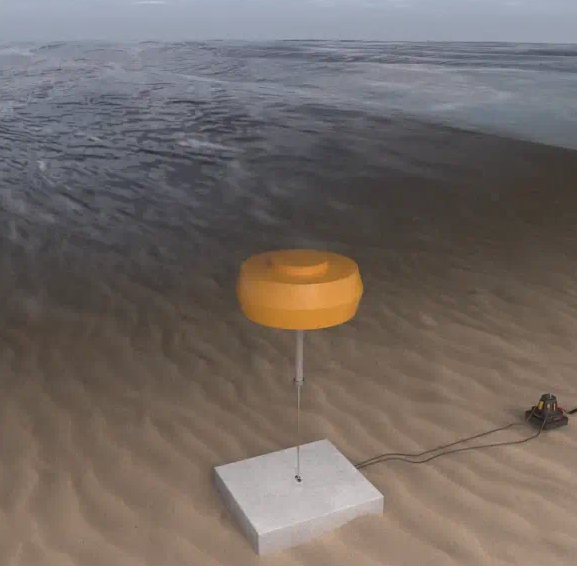
Learn more…
(Image source: PRIMRE)
Ocean Thermal Energy Conversion
Ocean thermal energy conversion (OTEC) technology converts solar energy stored in the layers of the tropical and subtropical oceans. Thermal heat engines use the temperature difference between the sun-warmed surface water and cold water in the deep ocean. This technology requires large volumes of water to convert a small portion of the available energy, yielding about 2.5%–3.0% of stored solar energy as net power after pumping and other power requirements are met (Avery 1994). OTEC can potentially provide very substantial amounts of power, making it attractive as a carbon-neutral baseload source. Under funding from the U.S. Department of Energy (DOE), open-cycle OTEC was successfully demonstrated with positive net energy production (up to 103 kW from 255 kW gross) from 1993 to 1998 at the Natural Energy Laboratory of Hawaii Authority (NELHA) facility at Keahole Point on the island of Hawaii (SERI 1989).
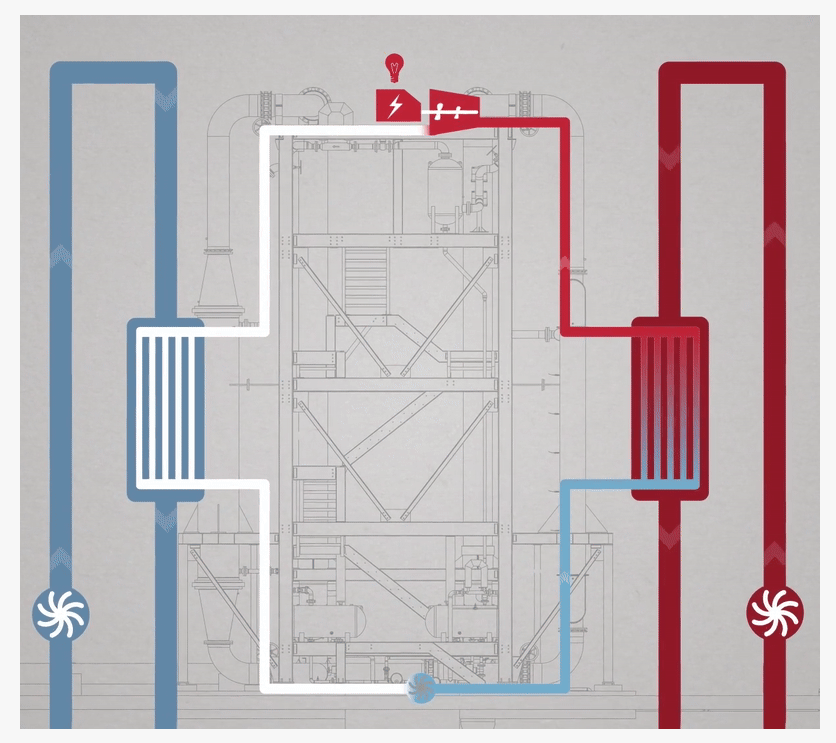
Learn more…
(Image source: Makai Engineering)
Current / Tidal
Current energy can be captured from tidal channels, ocean currents, or rivers. Ocean current energy technologies capture the energy from the relatively constant flow of ocean currents, which are driven by several factors, including wind, bathymetry, and the rotation of the Earth, as well as water temperature, density, and salinity. Tidal energy technologies capture the energy from flow induced by the rise and fall of tides, which is driven by gravitational influence of the moon and sun on the earth’s oceans. Land or subsea constrictions, such as straits and inlets, can create high velocity currents at specific sites, making them suitable for electricity generation. Riverine energy technologies extract the kinetic energy from flowing water in rivers to generate electricity. Although not technically a marine resource, as part of the natural hydrological cycle, precipitation from drainage basins, groundwater springs, and snow melt feed rivers that flow towards lakes, seas, and oceans.
Most current energy converters can be classed into several technology archetypes: axial flow turbine, cross flow turbine, reciprocating device, tidal kite, Archimedes screw, and vortex-induced vibration.
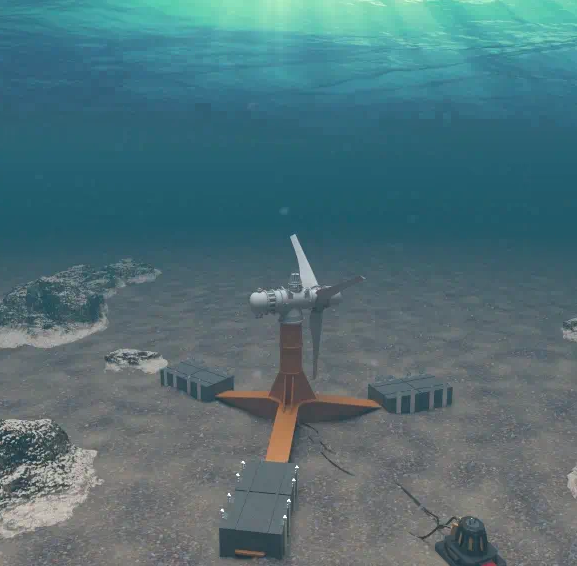
Learn more…
(Image source: PRIMRE)
Frequently Asked Questions
-
The most prominent marine energy resources in Hawaiʻi and the USAPI include wave energy, ocean thermal energy conversion (OTEC), and—in some applications—ocean currents. Pacific islands experiences consistent, high-quality wave conditions year-round, while many islands also have strong temperature differences between warm surface waters and cold deep waters that are well suited for OTEC. The relative importance of each resource varies by island, coastal exposure, water depth, and local energy needs.
-
No. While electricity generation is a common focus, marine energy systems ultimately produce usable energy, which can take many forms depending on how it is captured and applied. This energy may be used directly or indirectly for applications such as seawater desalination (reverse osmosis), hydrogen production, thermal processes, charging energy storage systems, or powering ocean instruments and infrastructure. These flexible end uses allow marine energy to support a wide range of innovative and location-specific solutions beyond traditional electricity supply.
-
Island and remote communities often rely heavily on imported fuels, which can be expensive, vulnerable to supply disruptions, and subject to global price volatility. Marine energy offers the potential for locally available, predictable, and renewable power that aligns with long-term goals around energy resilience, grid diversification, and reduced dependence on external fuel sources.
-
Environmental and cultural stewardship are core considerations in marine energy work in Hawaiʻi and the U.S.-Affiliated Pacific Islands. Ocean ecosystems, cultural practices, and community uses are carefully considered when evaluating where and how research or testing may occur. Recognizing and addressing these challenges is essential to developing marine energy in a way that is responsible, inclusive, and sustainable over the long term.
-
Marine energy is often explored as a complementary resource, rather than a replacement for existing renewables. Because ocean conditions can differ from daily solar or local wind patterns, marine energy has the potential to contribute to a more balanced and resilient energy mix.
-
Marine energy faces both technical challenges—such as operating reliably in harsh ocean environments and reducing costs—and non-technical challenges related to permitting, environmental review, community acceptance, and integration with existing energy systems. Addressing these challenges depends on high-quality data and testing, including resource characterization, device performance, environmental monitoring, and operational experience in real ocean conditions, which help reduce uncertainty and inform responsible decision-making.
-
Marine energy can be applied at multiple scales, depending on the technology, location, and energy goals. Some concepts are well suited for grid-connected applications, while others may support specific facilities, microgrids, or community-scale uses. Determining the appropriate scale is a key focus during project research and planning.
-
The Blue Economy broadly refers to economic activities that rely on the ocean while prioritizing long-term environmental stewardship and community benefit. In the context of marine energy, this often means small- to medium-scale applications that support coastal industries, research infrastructure, aquaculture, desalination, monitoring, or remote facilities—rather than only large, grid-scale power generation. Marine energy can serve as an enabling technology within the Blue Economy by providing locally available energy where conventional power is limited, costly, or impractical.