

Wave Energy Deployment Off Oʻahu Advances Renewable Ocean Energy Research
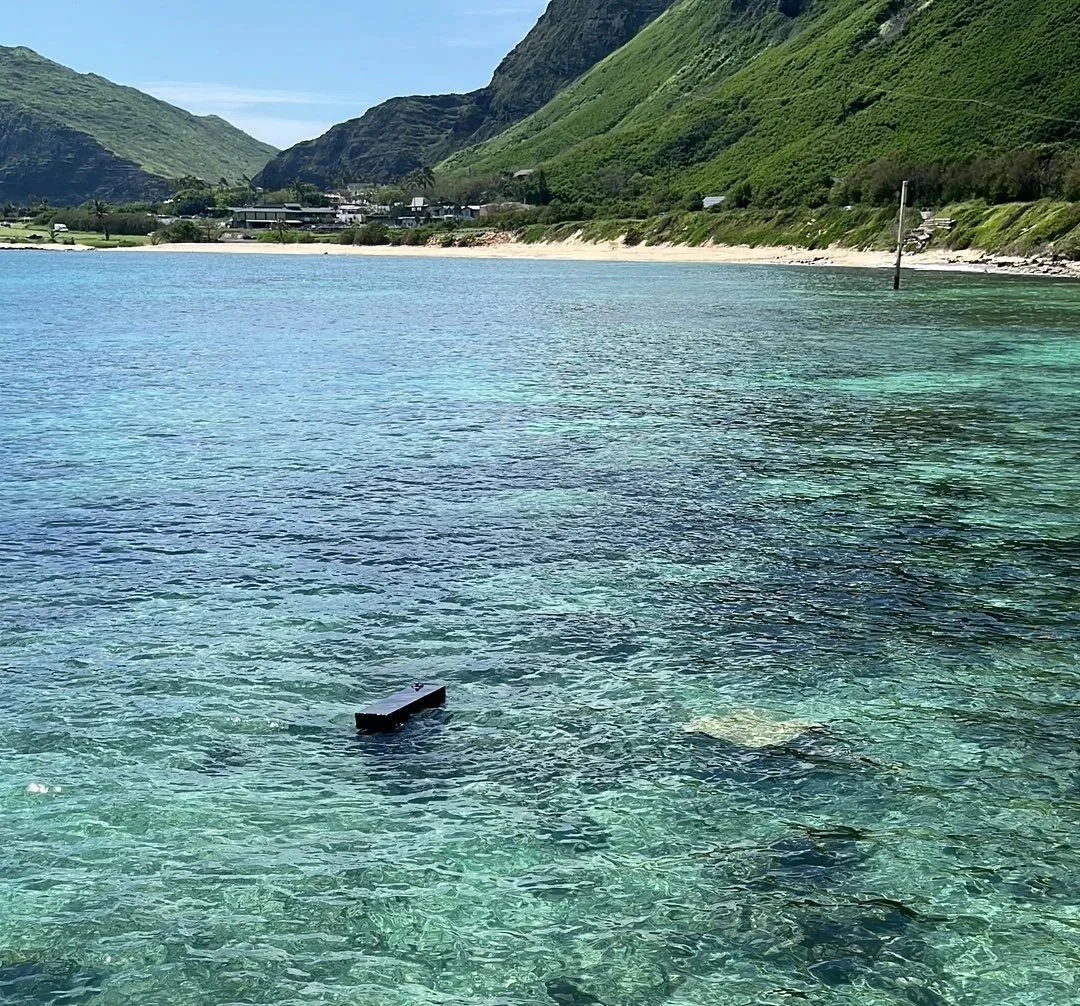
Two years of engineering design, prototype testing, environmental permitting (state and federal reviews), and logistical coordination culminated on a calm morning in March, when researchers from the Hawaiʻi Marine Energy Center (HMEC) and the National Laboratory of the Rockies (NLR) deployed a wave energy converter at the University of Hawaiʻi’s Makai Research Pier in Waimānalo. Designed to convert wave motion into electricity, the Small Underwater Research Flap Wave Energy Converter (SURF-WEC) device has entered a year-long testing phase aimed at demonstrating the viability of marine energy technologies in island environments while advancing researchers’ understanding of their operation and maintenance requirements.
The ocean deployment focuses on fatigue and survivability, including real-time wave energy converter performance, data acquisition system reliability, high-cycle loading and wear, and biofouling effects. The data collected during the deployment will help researchers evaluate how wave energy systems perform under prolonged exposure to real-world ocean conditions.
The project also includes environmental monitoring efforts. Researchers from the Pacific Northwest National Laboratory (PNNL) conducted a short-term hydrophone deployment to confirm that the device’s acoustic signature would have minimal environmental impacts. PNNL also installed a live camera system to provide ongoing monitoring of potential interactions between the device and marine life throughout the testing period.
The installation process was carried out in three phases: deployment of the bottom-mounted flap frame; installation of the power take-off (PTO) frame, including the routing of hydraulic hoses and electrical cabling along the seafloor and onto the pier; and final attachment of the nominal one-meter-square oscillating wave surge converter flap.
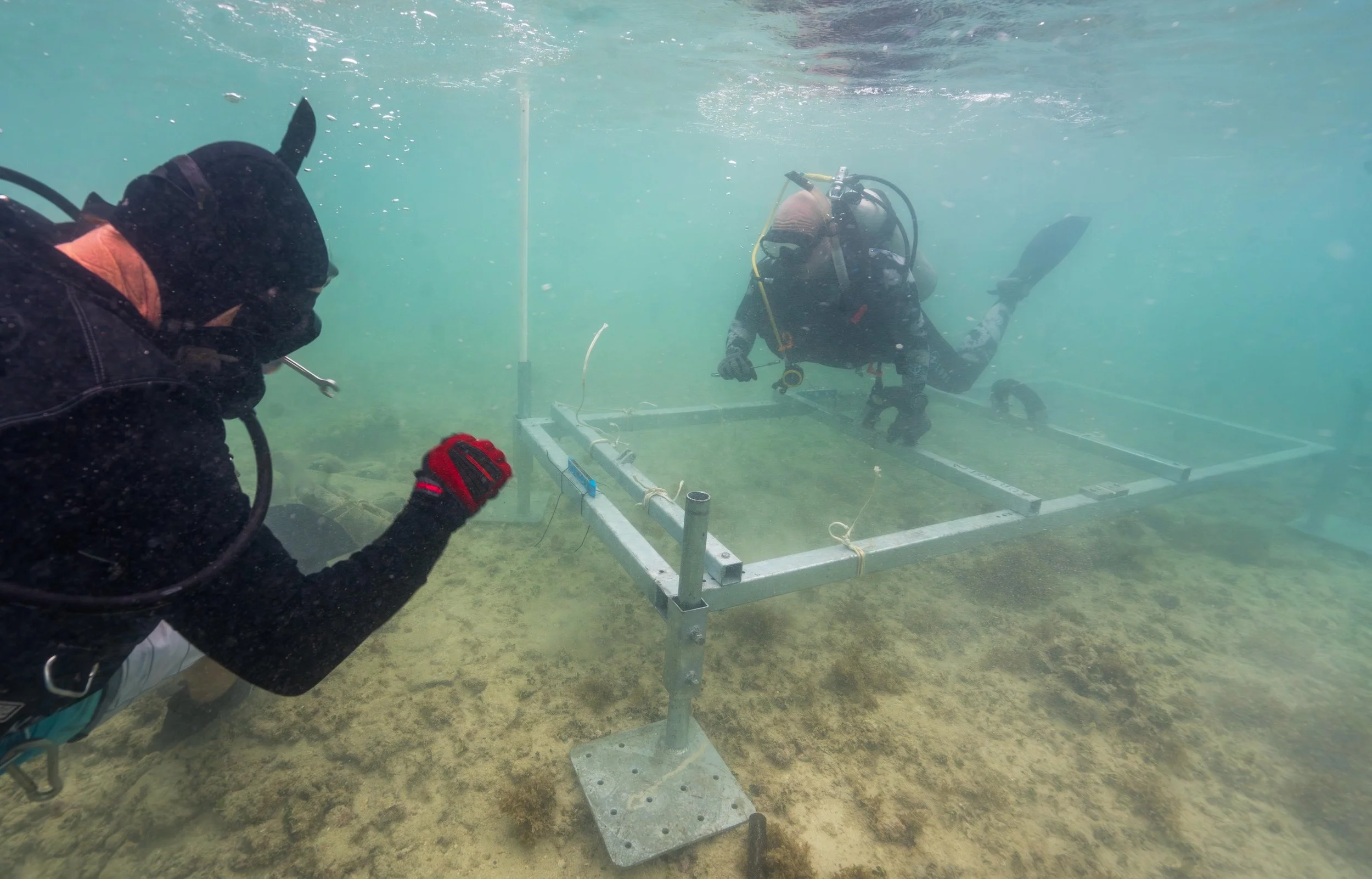
The galvanized steel platforms were lowered into the water from the Makai Research Pier using a forklift. Swimmers and SCUBA divers then disconnected the lifting bridles, maneuvered the frames into position, and guided the platforms to the seafloor. The structures were then secured using methods reviewed through the project’s environmental assessment and permitting process to minimize disturbance to the surrounding reef environment.
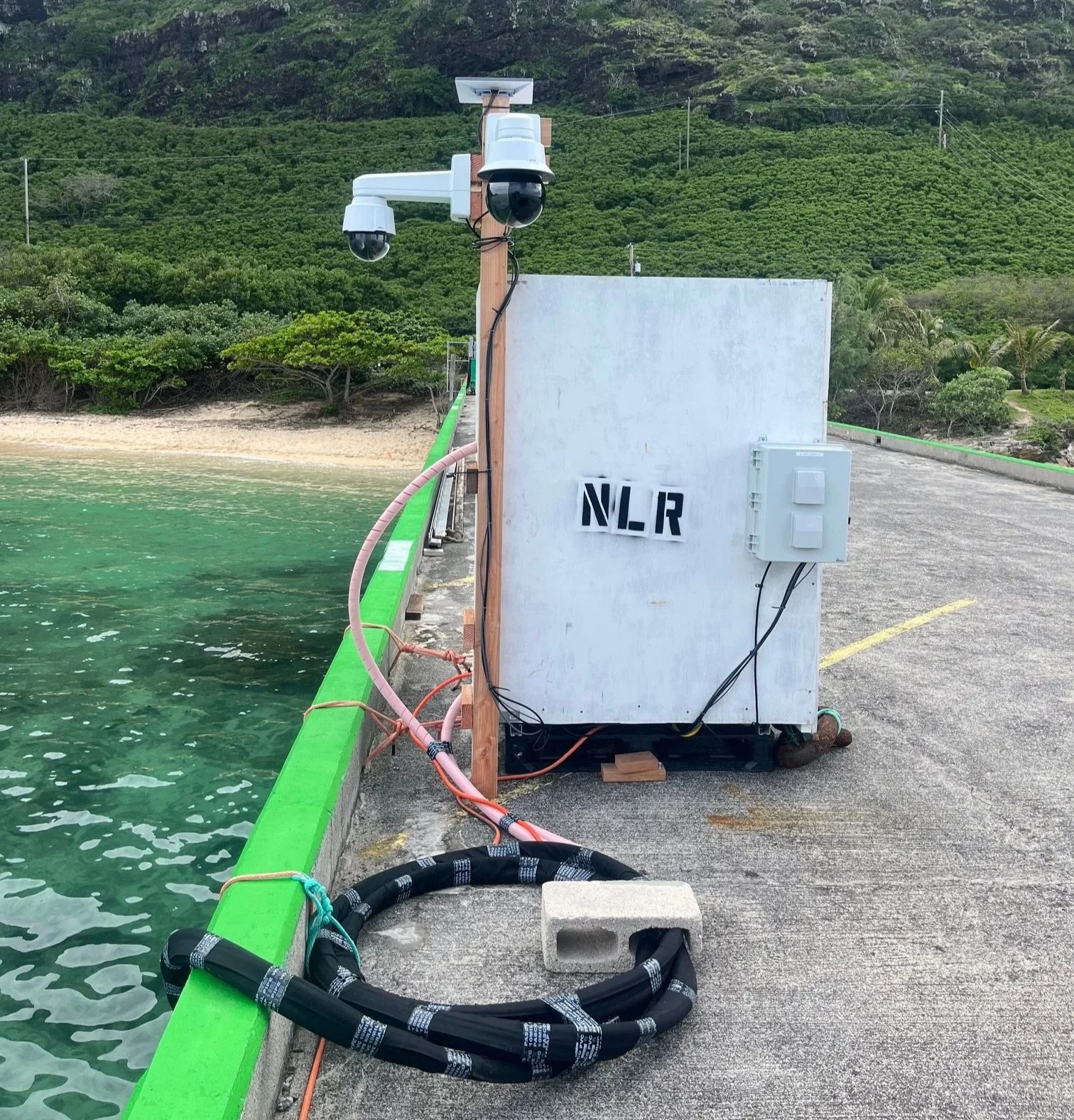
Crews carefully uncoiled, secured, and routed the hydraulic hoses and electrical cable 20 meters along the seafloor to the pier, where the lines were fed through a PVC conduit mounted to a pier piling and brought onto the pier deck.
The final installation phase involved attaching the oscillating flap to the deployed platform. Crews used a forklift to lower the 100-pound assembly to the water’s surface before floating it into position alongside the frame. Divers flooded the flap to facilitate alignment, then seated the shaft onto saddle clamps and secured it with stainless steel through-bolts. Once the assembly was in place, compressed air from a SCUBA cylinder was used to purge water from the flap.
On the pier, crews connected the hydraulic hoses and electrical cable to the shore station and remotely activated the system. The converter then began its first operational testing, harnessing wave motion to generate electricity.
NLR researchers continue to remotely monitor real-time system data from Colorado, while the HMEC team conducts twice-monthly in situ inspections to assess wear, fatigue, and biofouling. Together, the teams hope the deployment will provide valuable insight into the long-term durability and performance of marine energy systems operating in dynamic ocean environments.
Researchers expect the year-long deployment to generate new operational and environmental data that will help guide future marine energy development in Hawaiʻi and other island communities. Additional updates and findings will be shared as testing progresses.