SURF-WEC
Project Background
The Small Underwater Research Flap Wave Energy Converter (SURF-WEC) project emerged through a collaboration between the Hawaiʻi Marine Energy Center (HMEC) at the University of Hawaiʻi and the National Laboratory of the Rockies (NLR). The partnership developed from NLR’s interest in the Hawaiʻi Wave Surge Energy Converter (HAWSEC) project, which has involved several years of numerical modeling, laboratory testing, hydraulic PTO development, and wave basin experiments focused on oscillating surge wave energy converters. In particular, NLR was interested in leveraging the HAWSEC wave capture device — a bottom-mounted pitching flap — because of the extensive hydrodynamic understanding and experimental experience already developed through the HMEC-led research effort. The HAWSEC project had already demonstrated a strong foundation in flap-type wave energy converter design, including characterization of wave loading, device response, and hydraulic coupling behavior across both numerical and experimental environments. This existing knowledge base created an opportunity to accelerate development by integrating a proven wave capture architecture with new PTO technologies rather than beginning from a completely new device concept.
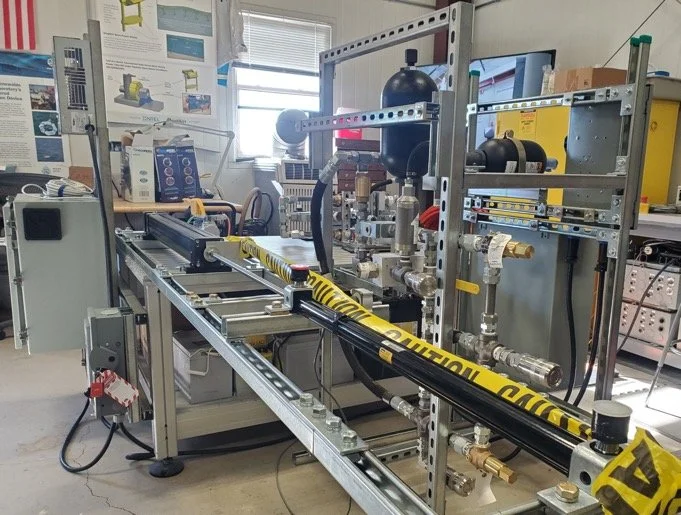
The collaboration combined HMEC’s expertise in oscillating flap hydrodynamics, marine operations, and deployment support with NLR’s ongoing work in advanced hydraulic power take-off (PTO) technologies. Prior to ocean deployment, NLR designed and assembled the SURF-WEC PTO system in their Colorado laboratory, where the hydraulic subsystem underwent extensive bench testing and refinement. This work included integration of hydraulic accumulators, control valves, instrumentation, fluid routing, and power conversion hardware to evaluate system response, controllability, and operational performance under representative loading conditions. The laboratory testing campaign provided an important opportunity to validate subsystem behavior, identify mechanical and hydraulic issues, and iteratively improve the PTO architecture before integration with the wave energy device.
The integration of a mature oscillating flap platform with an actively developed hydraulic PTO system created an opportunity to transition beyond laboratory-scale subsystem testing toward a compact field-deployable wave energy research platform. The project therefore served as both a technology development effort and a collaborative step toward expanding practical marine energy testing capabilities in Hawaiʻi.
HMEC Deployment Support
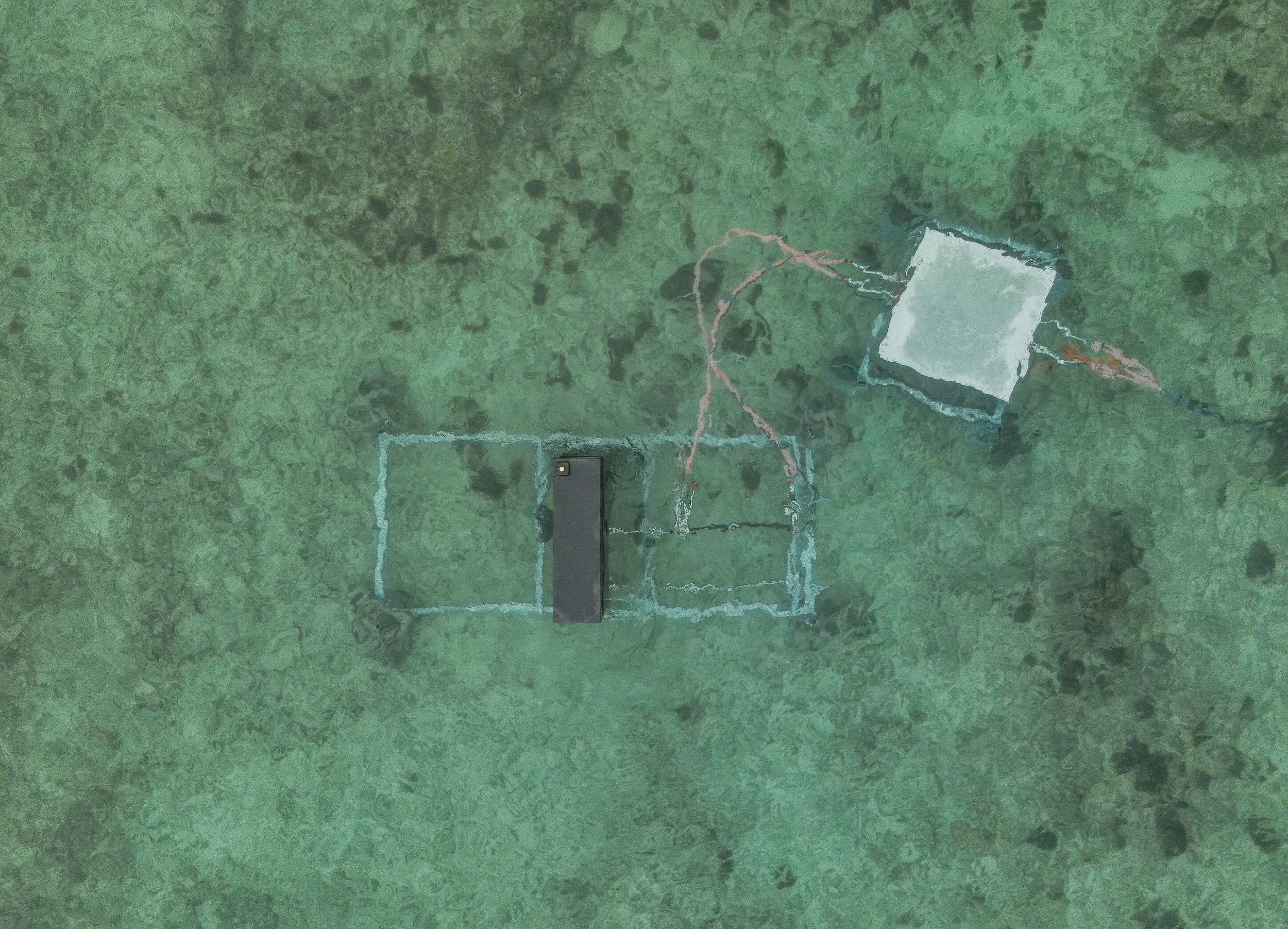
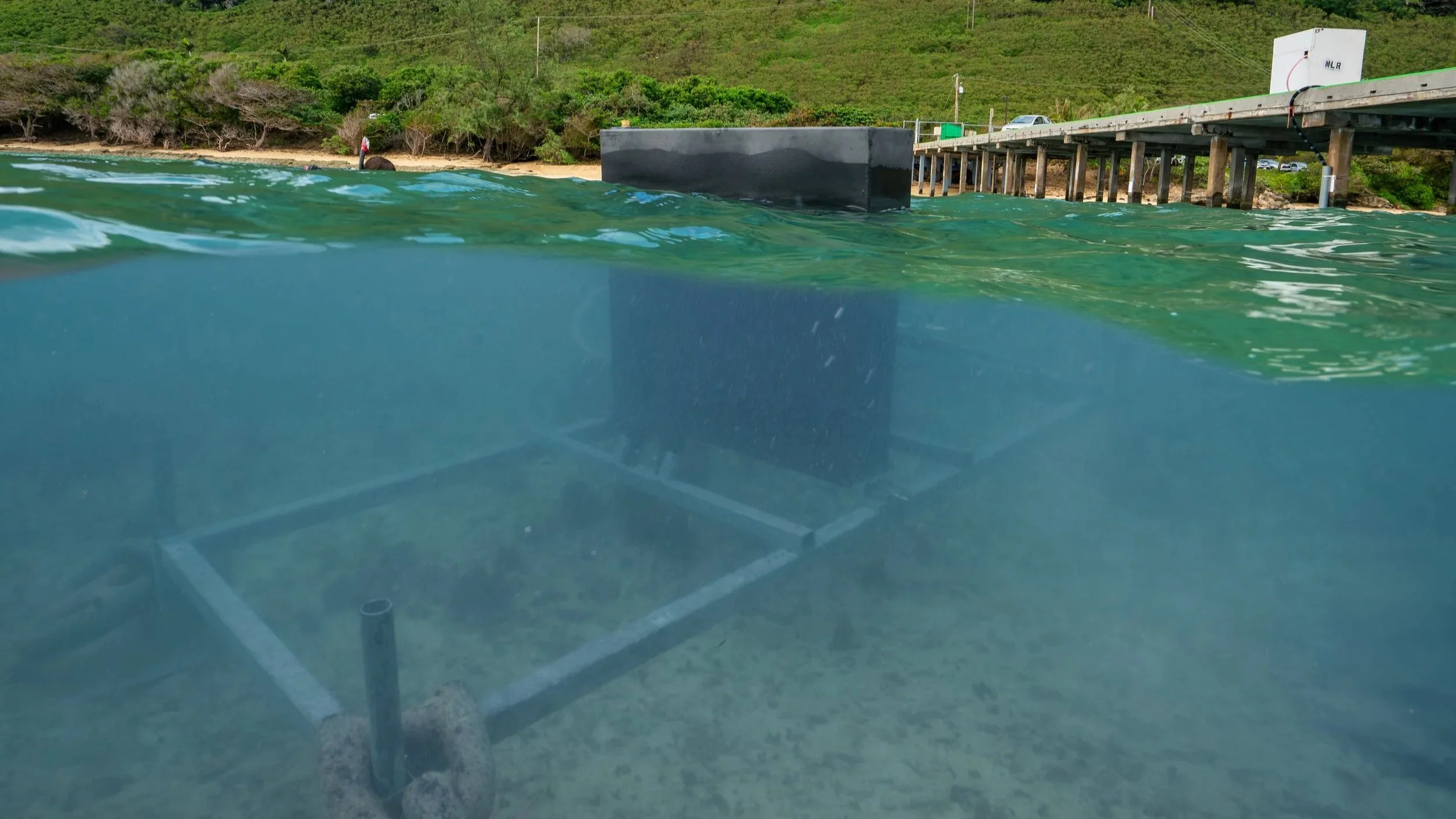
HMEC has supported planning, permitting, and deployment activities for the SURF-WEC project at Makai Research Pier in Waimānalo, Hawaiʻi. The site was selected because it provides access to existing pier infrastructure, shallow-water conditions, and relatively controlled deployment logistics while still exposing the system to real ocean waves and marine environmental conditions. The nearshore configuration also provides convenient access to the deployed system for ongoing inspection, maintenance, instrumentation, and operational monitoring activities throughout the duration of the project.
As part of the early project phases, HMEC supported environmental compliance coordination, marine safety planning, and operational logistics associated with conducting wave energy research in a nearshore environment. This included coordination related to state and federal permitting pathways, navigation safety considerations, and environmental review processes associated with temporary deployment of marine energy systems in coastal waters. The project also included deployment of Sofar Spotter buoys to characterize local wave conditions and improve understanding of the nearshore wave environment surrounding the deployment area. These measurements supported planning efforts and helped establish baseline environmental and wave data prior to installation of the wave energy device.
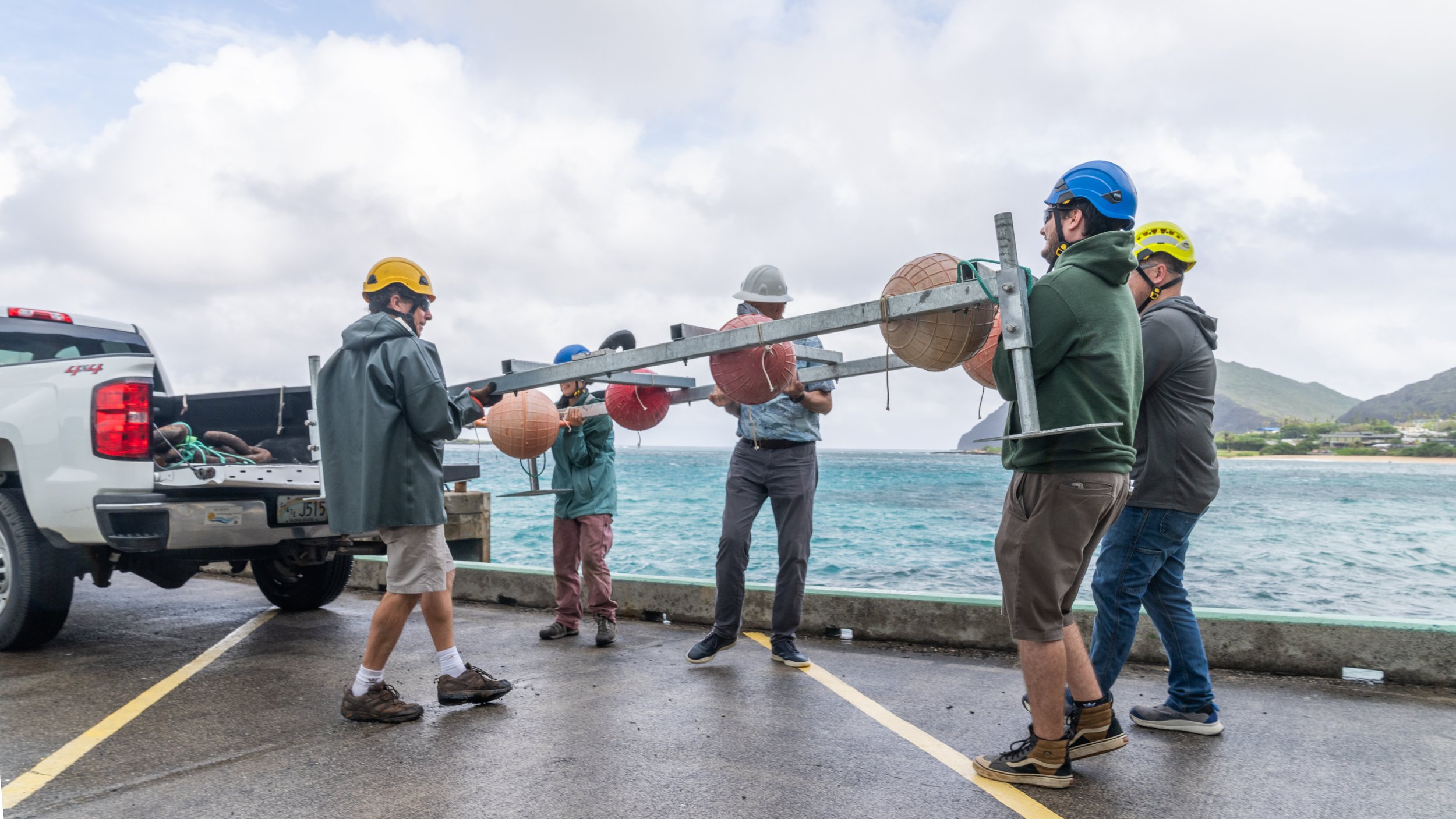
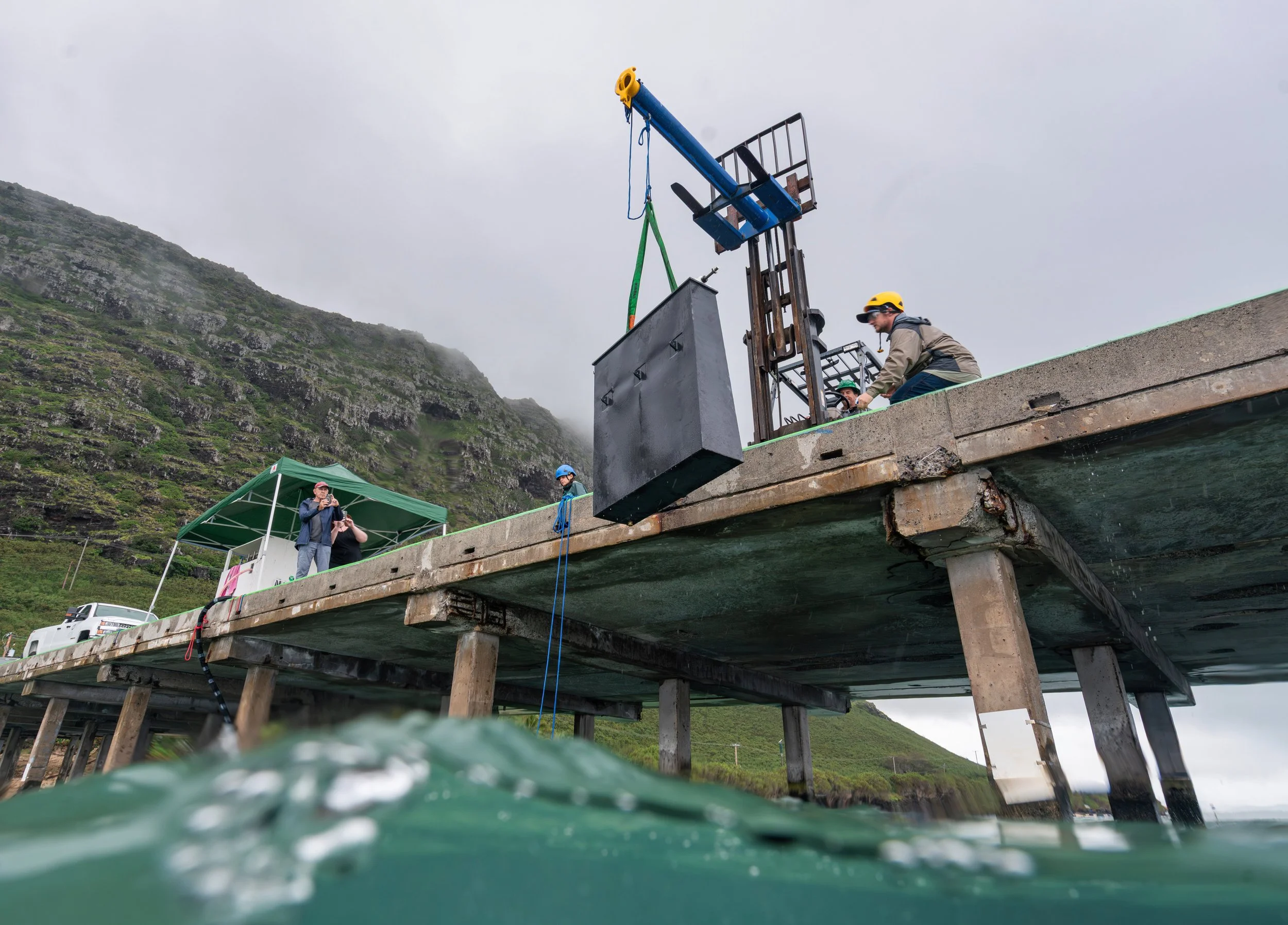
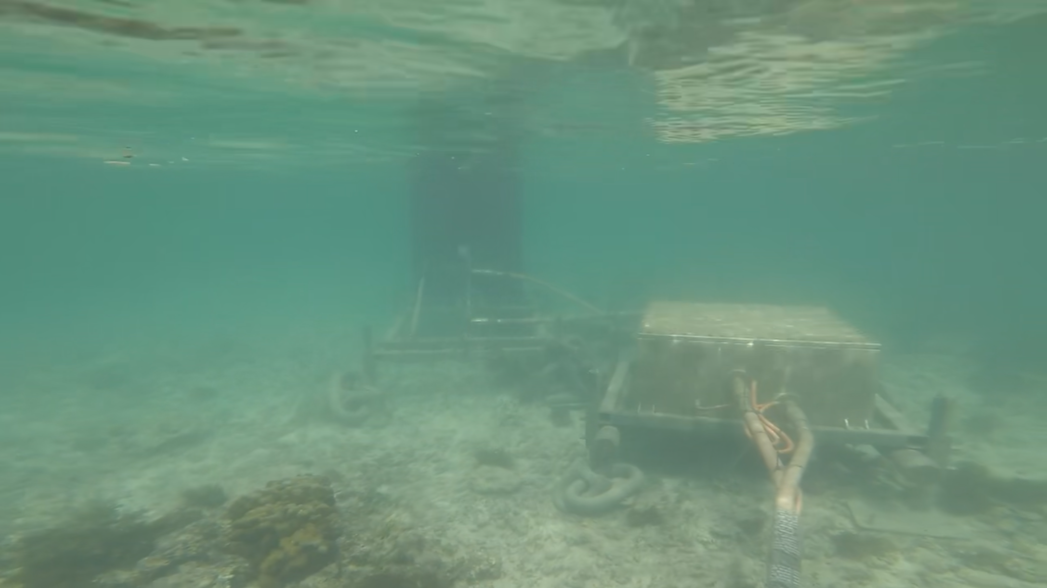
Deployment of the SURF-WEC system required coordination between engineers, divers, marine operations personnel, and researchers to assemble, lower, secure, and commission the system adjacent to the pier. HMEC personnel assisted with deployment logistics, in-water operations, instrumentation support, and integration of the shore-based hydraulic and electrical systems. Activities were specifically planned to minimize disturbance to the surrounding environment while maintaining safe and efficient marine operations near the pier facility.
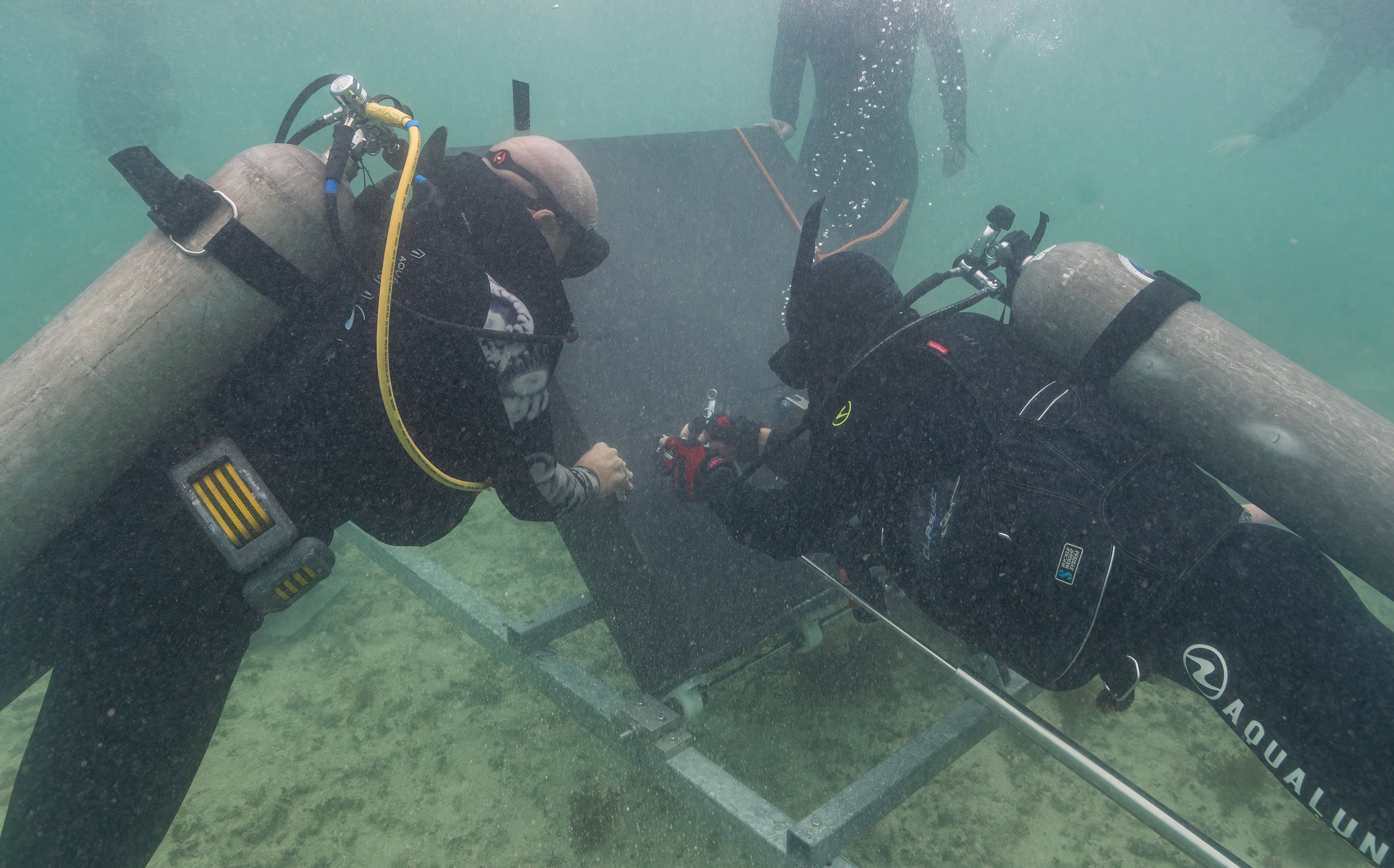
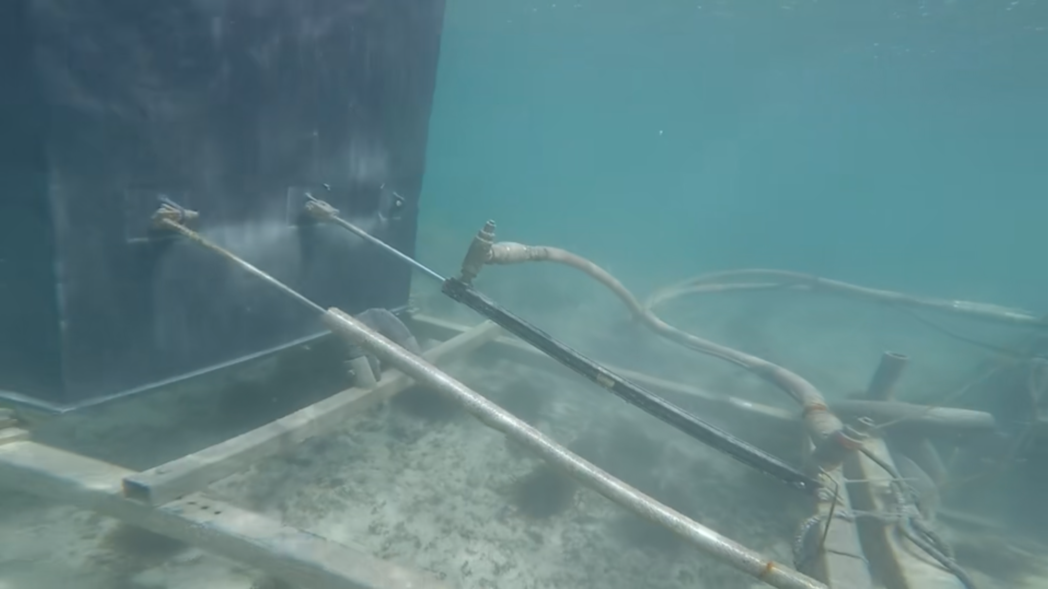
The shallow-water deployment environment also allowed much of the installation work to be carried out directly by divers operating from the pier rather than relying exclusively on support vessels. Divers assisted with positioning and alignment of the device, routing and securing subsea cables, connecting hydraulic and electrical interfaces, and performing in-water inspections during commissioning activities. This approach provided the project team with greater flexibility during installation and simplified iterative adjustments to the system as operational requirements evolved in the field.
The system remains actively deployed, and the project team continues to conduct routine inspections and operational monitoring throughout the deployment period. Regular inspection activities, typically occurring every two weeks, support ongoing evaluation of marine growth, structural condition, hydraulic system performance, corrosion, sensor reliability, cable management, and general operations and maintenance requirements associated with long-duration deployment of marine energy systems.
Goals and Objectives
A major goal of the SURF-WEC project is to support advancement of the broader marine energy community by generating practical knowledge from real-world deployment experience. While laboratory testing and numerical modeling remain essential components of marine energy research, long-duration ocean deployments provide important insight into how systems behave under continuous environmental loading and operational uncertainty. The project therefore serves as an opportunity to better understand operations and maintenance requirements for small wave energy systems, including inspection frequency, component wear, marine growth management, structural fatigue, hydraulic system reliability, deployment logistics, and recovery procedures.
The project also supports ongoing evaluation of how marine energy systems interact with the surrounding ocean environment. This includes observations related to marine life interactions, site accessibility, navigational considerations, and deployment practices intended to minimize environmental disturbance while supporting safe marine operations. Continuous monitoring of the deployed system additionally provides operational data related to sensor performance, instrumentation reliability, and long-duration operation in a harsh marine environment.
From HMEC’s perspective, SURF-WEC represents an important step toward expanding Hawaiʻi’s marine energy testing ecosystem and strengthening pathways for future marine energy demonstrations in the Pacific region. The project contributes to growing local experience with permitting, deployment support, marine operations, and long-duration system monitoring while supporting collaboration between universities, national laboratories, industry partners, and technology developers. Additional deployment photos from NLR have been shared here, while ongoing system data and operational monitoring are available through the real-time monitoring portal. HMEC will continue updating this page with new media, field observations, and project developments as deployment activities progress.